


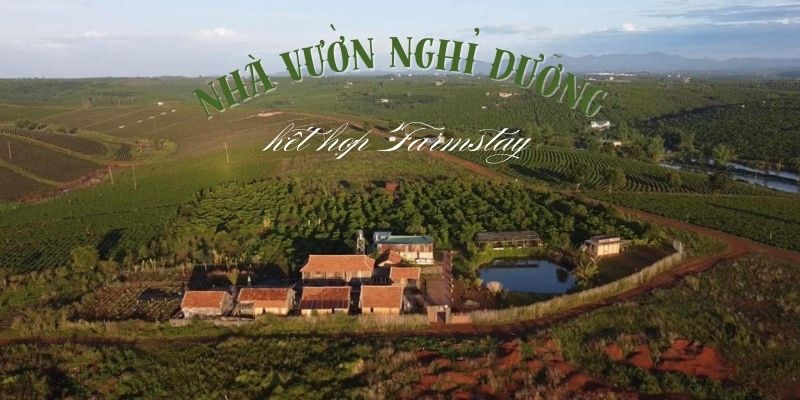
RESORT GARDEN HOUSE COMBINED WITH FARMSTAY: A SUSTAINABLE BUSINESS IDEA
In the context of a society increasingly focused on green and sustainable living, the model of a resort garden house combined with a farmstay has emerged as a highly potential solution. The fusion of a natural living space with authentic agricultural experiences has created a unique appeal for this model, offering long-term economic and environmental benefits.
Understanding the resort garden house combined with farmstay model
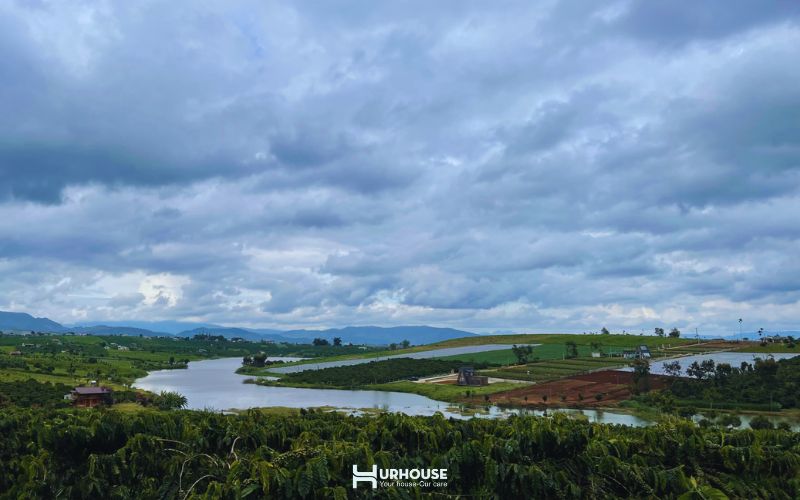
A garden retreat house combined with a farmstay is mainly built in rural areas and suburban regions
The resort garden house combined with farmstay is typically developed in suburban or rural areas, away from the hustle and bustle of city life. This concept originated in Italy in the 1980s and quickly spread to North America and Europe. In recent years, farmstays have become a popular tourism trend in Vietnam, especially in destinations like Da Lat, Sapa, the Central Highlands, and the Mekong Delta.
A resort garden house with a farmstay is a unique blend of “farm” (agriculture) and “homestay” (lodging). This model utilizes farmland to develop eco-friendly tourism, creating a retreat surrounded by lush greenery and offering visitors a chance to reconnect with nature.
Read more:
- Nhà vườn nghỉ dưỡng: Xu hướng đầu tư bền vững
- Nhà vườn hay nhà phố: Góc nhìn từ xu hướng sống hiện đại
- Nhà vườn nghỉ dưỡng: 4 yếu tố cảnh quan giúp nâng tầm trải nghiệm
Why is the resort garden house combined with farmstay gaining popularity?
The growing popularity of this model stems from its perfect combination of relaxation needs and a green lifestyle. In an era where people face increasing work pressures and urbanization, farmstays provide a unique experience, bringing individuals back to the pristine beauty of nature.
First and foremost, this model meets the demand for green spaces. The vacation homes are often designed simply, using natural materials such as wood, stone, and plants to create a warm and welcoming atmosphere. A standout feature of farmstays is the deep connection between visitors and the local lifestyle. Guests can explore local customs, traditions, and cuisine, gaining a better understanding of the region they visit.
The harmonious blend of nature, people, and simple values has made the resort garden house combined with a farmstay an increasingly beloved destination.
Sukasantai Farmstay – A prominent farmstay model in Indonesia
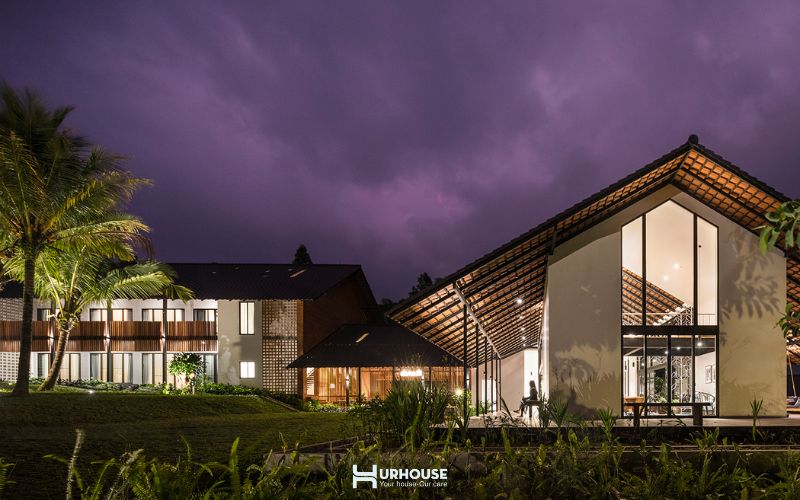
A well-known business model of resort garden house combined with farmstay in Indonesia
Sukasantai Farmstay is located in the highland region of Gunung Gede, Sukabumi, Indonesia. Established in 2019, it spans 30 hectares and includes an organic vegetable farm, fruit orchards, and a bamboo forest. This destination has become a well-known eco-tourism site, attracting visitors worldwide. Here, guests can participate in various activities such as farming, nature walks, and cultural experiences.
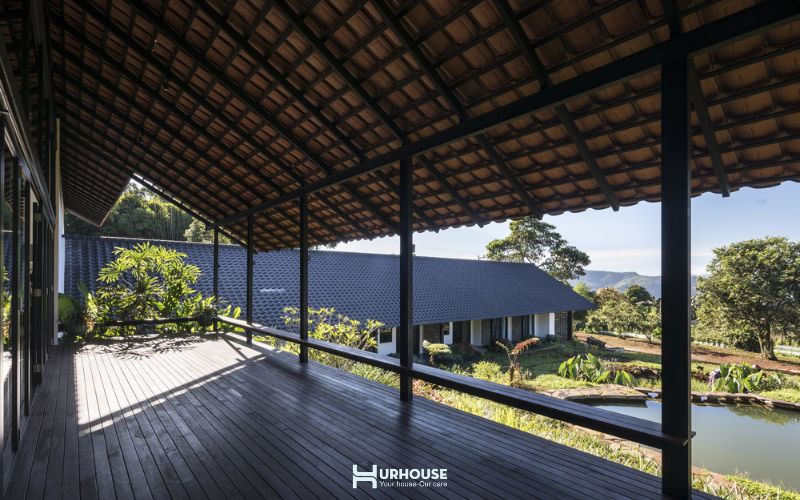
A distinctive sloped roof design suitable for local natural conditions
Designed with the simplest approach to minimize environmental impact, this countryside-inspired resort garden house features 12 bedrooms arranged along a 75-meter-long linear structure, harmonizing with the gently sloping terrain. Sukasantai Farmstay is distinguished by its high ceilings, creating a spacious and airy atmosphere. The highlight of the project lies in its use of rustic, locally sourced natural materials, skillfully incorporated into the design.
Sukasantai Farmstay is a remarkable farmstay model that serves both as a business venture and as a bridge connecting people with nature.
Conclusion
The combination of a resort garden house and farmstay as a business model represents a sustainable approach, fostering a deeper connection between people and nature while promoting eco-friendly tourism. By balancing unique vacation experiences with practical agricultural activities, this model opens up opportunities for individuals to regain balance in modern life.
