



FAMOUS NEOCLASSICAL STYLE BUILDINGS
Neoclassical style emerged as a tribute to and a revival of the beauty of ancient Greek and Roman architecture. It has become a symbol of grandeur and magnificence, reflected in many significant structures around the world. The following article will provide you with valuable insights, fresh perspectives, and design inspiration in the neoclassical style.
What is Neoclassical style?
Neoclassical Interior style began to emerge during the Renaissance period around 1750 and flourished throughout the 18th and 19th centuries. Daniel Kahan, principal architect at Smith and Moore Architects in Palm Beach, Florida, explains: “It’s an architecture style that references the rules and the traditions of classicism.” In essence, Neoclassical architecture is considered a revival of classical styles in architectural art. The birth of Neoclassicism aimed to approach architectural design in a more simplified manner.
In the early to mid-20th century, the Neoclassical design trend gradually gave way to Modernism. However, even in an era dominated by contemporary architecture, Neoclassical buildings and structures continue to be designed and constructed, albeit on a more limited scale. Today, this style is often revived under the name “New Classical.”
Read more: Phong cách cổ điển là gì? Đặc điểm của phong cách thiết kế cổ điển trong thiết kế nội thất
Key features of Neoclassical style
The Neoclassical style is characterized by a balance between elegance and simplicity. Here are three key features of this style:
- Simplicity and minimalism: Overall, the Neoclassical style focuses on simplicity and sophistication, characterized by grand scale and elegant design. Unlike the classical style, which emphasizes intricate and elaborate details, Neoclassicism eliminates excessive ornametation to highlight clean, refined lines. This minimalistic approach dose not take away from the classical beauty; instead; it enhances the elegance and luxury of the space.
- Emphasis on symmetry: The Neoclassical style often follows the golden ratio principle ensuring balance and symmetry. This approach creates harmony and coherence, establishing a strong connection between architectural elements within the home. The seamless arrangement enhances the sense elegance and sophistication in the space.
- Distinctive domed roofs: Neoclassical style buildings often feature prominent domed roofs. Inside, these vaulted designs allow viewers to look up and fully appreciate the building’s height from within.
Famous Neoclassical architecture around the world
The White House, USA

A world famous bulding with stunning neoclassical architecture
The White House is perhaps the most famous neoclassical-style building in the United States, serving as a prime example of Palladian neoclassical architecture. Designed by Irish-American architect James Hoban, the project was personally selected by President George Washington.
This iconic structure took eight years to build, primarily using sandstone. It consists of six floors, covering an area of 5,100 square meters, and is surrounded by approximately seven hectares of land. The building features 412 doors and 147 windows. Inside the White House, there are various areas dedicated to political functions, including the President’s office and offices for senior officials.
Buckingham Palace
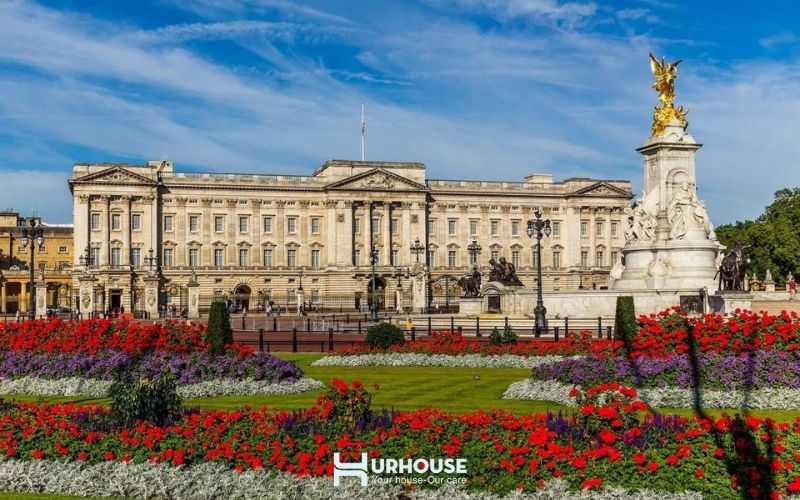
Buckingham Palace in the United Kingdom
Buckingham Palace, located in the heart of London, England, is considered one of the world’s most famous landmarks in the Neoclassical style, built in 1703. It stands out with its Doric columns, intricate decorative details, and perfect symmetry. With its sophisticated architecture, the palace creates a stunning masterpiece that attracts visitors from all over the world to admire.
Academy of Athens
The Academy of Athens, built between 1859 and 1885 in Greece by architect Theophil Hansen, is a prime example of Neoclassical design, showcasing the elegance and grandeur characteristic of this style.
The United States Supreme Court Building

The United States Supreme Count Building has presered its inherent beauty over the years
Completed in 1935 by architect Cass Gilbert, the United States Supreme Court Building embodies the defining characteristics of the Neoclassical style of its time. Featuring grand staircases and sturdy Corinthian columns, this iconic structure has withstood the test of time. Despite centuries and multiple restorations, it has preserved its original Neoclassical beauty.
Conclusion
In summary, despite the passage of time and countless transformations, the Neoclassical style continues to be highly regarded and influences modern design trends today. Follow URHOUSE’s website to stay updated with more valuable insights!
